OPTICAL DESIGN
CCD-Array
Spectrometers
In a Fastie-Ebert optical configuration, light enters the monochromator through a thin entrance slit. This point source light diverges in until it arrives at a convex mirror collimating the light into parallel rays. A fixed holographic grating disperses the parallel rays of light where they are once again reflected from the convex mirror and refocused across a high-sensitivity CCD detector, ensuring absolute wavelength reproducibility without mechanical wear and deviation.
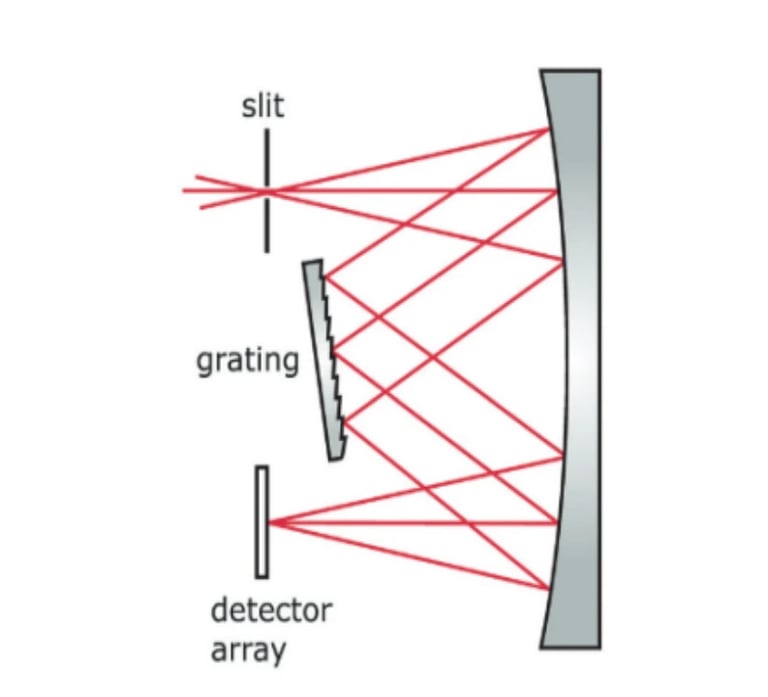
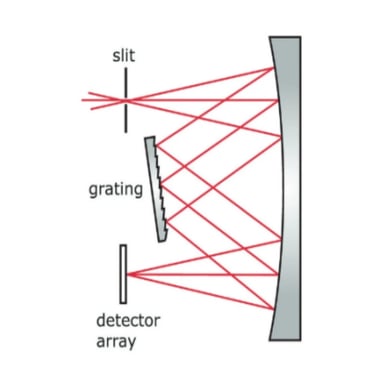
Ebert-Fastie spectrograph optical configuration
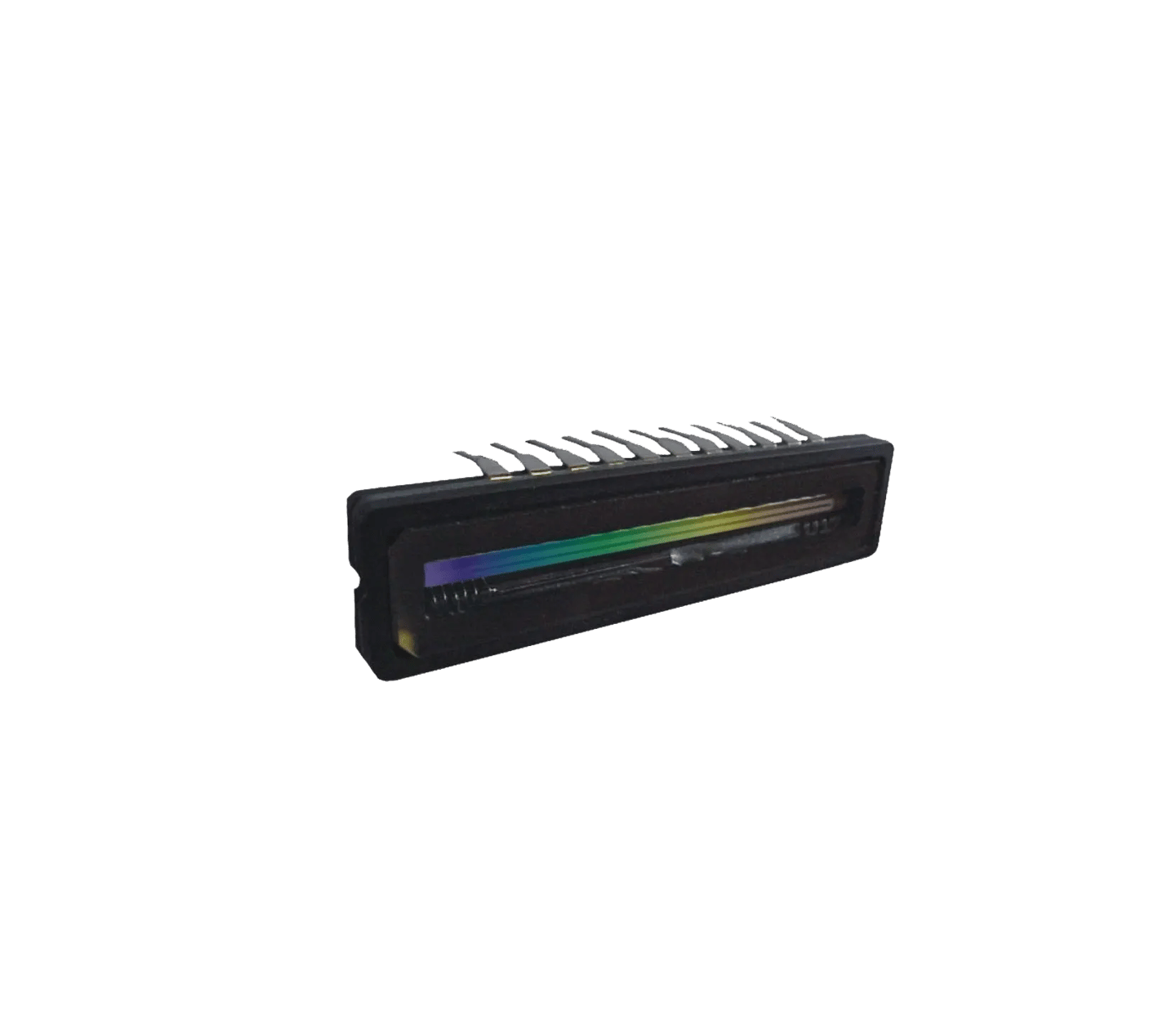
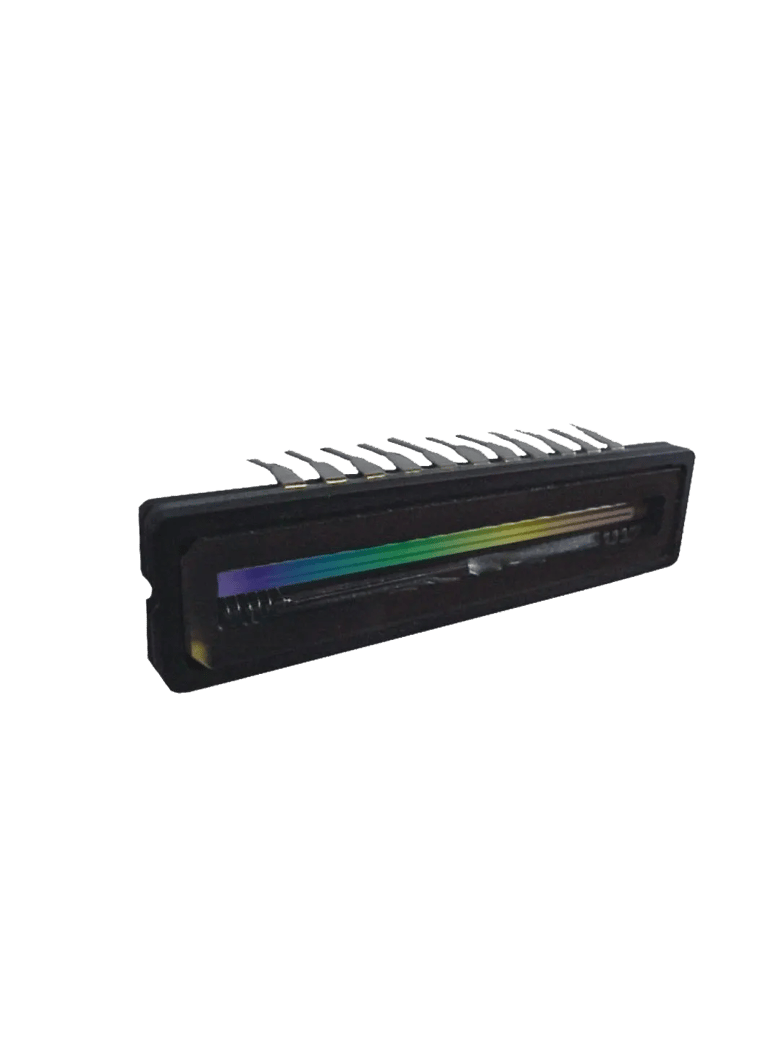
High-sensitivity CCD detector array
A high-sensitivity CCD detector consists of 3,648 pixel elements 8 microns in width. The binning of pixels coupled with the initial slit width results in a spectral bandwidth of 1.1 nm.
Each CCD undergoes treatment for enhanced for UV detection performance.
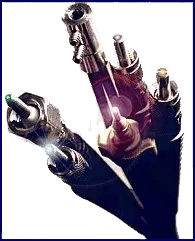
Fiber optics use in spectroscopy
Fiber optic sampling accessories can be manufactured in a variety of configurations for
UV-Vis applications. Only the highest quality optical fibers are used in the assembly with high-OH core fibers capable of UV transmission down to 180 nm making it a key feature in all our assemblies.
Fiber optics allow for sophisticated optical designs and reduced footprints and improved light throughput not available with traditional fixed optic spectrophotometers. Traditional fixed optics require multiple optical surfaces resulting in a loss of quantum efficiency proportional to the number of surface interactions. This flexible nature of fiber optics allows for dramatically different optical configurations and sampling options.
Optical Architecture Shift
Conventional scanning instruments trade speed for resolution. Our CCD-array design delivers the simultaneous capture of a complete spectra in milliseconds, every time.
Scanning Monochromators
Instantaneous CCD Array Detection
Slow mechanical drives rotate a grating to measure one wavelength at a time, introducing mechanical drift and limiting kinetic analysis.
All wavelengths are collected simultaneously on a 3,648-element detector. No moving components means permanent calibration and millisecond acquisition.